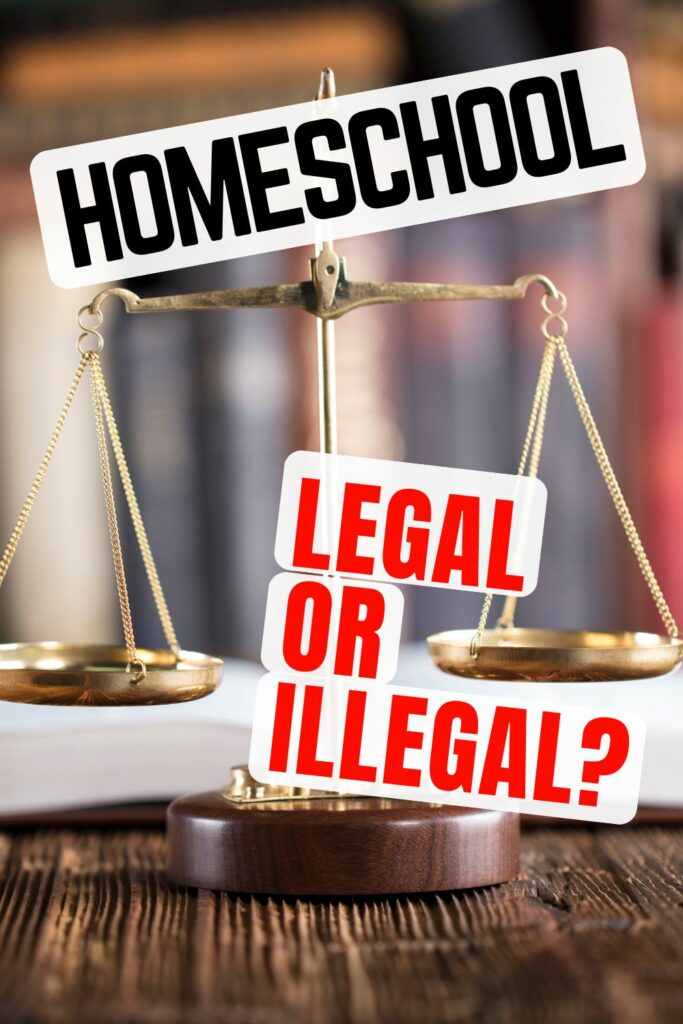
Homeschooling has become a popular alternative to traditional education for families worldwide. But where is it illegal, and where is it legal? With a growing interest in homeschooling, it’s essential to understand the laws and regulations surrounding it in different countries. Join me as we explore the worldwide landscape of homeschooling legality and learn about the various laws and regulations that dictate where homeschooling is accepted and where it’s not.
Affiliate links are used on this website.
In What Countries is Homeschooling Legal?
Homeschooling is legal in many countries, including the United States, Canada, the United Kingdom, Australia, New Zealand, South Africa, Germany, Austria, Italy, Norway, and many others.
I hope you enjoy reading this blog post. If you want to do my course on how to homeschool, click here.
However, the laws and regulations surrounding homeschooling vary from country to country, so it’s important to familiarize yourself with the specific laws in your jurisdiction.
Note: It’s not possible to provide a complete list of countries where homeschooling is legal as it changes frequently, but here are some countries where homeschooling is legal:
- United States
- Canada
- United Kingdom
- Australia
- New Zealand
- South Africa
- Germany
- Austria
- Italy
- Norway
- France
- Sweden
- Denmark
- The Netherlands
- Belgium
- Switzerland
- Japan
- South Korea
- Singapore
- India
- Ireland
- Portugal
- Finland
- Russia
- Brazil
- Argentina
- Mexico
- Chile
- Costa Rica
- Panama
- Honduras
- The Philippines
- Thailand
Note: Laws and regulations surrounding homeschooling vary from country to country, so it’s always best to consult the local authorities and check the most up-to-date information.
In What Countries is Homeschooling Illegal?
Homeschooling is illegal or restricted in some countries, including:
Here is a list of 20 countries where homeschooling is either illegal or restricted:
- Germany
- Sweden
- Norway (for children under the age of 12)
- Austria (for children over the age of 15)
- Greece
- France
- Finland
- Belgium
- Italy
- Portugal
- Czech Republic
- Slovenia
- Slovakia
- Hungary
- Romania
- Bulgaria
- Croatia
- Cyprus
- Malta
- Spain (unlegislated)
Please note that the legality of homeschooling can vary within each country and can change over time, so it’s always best to consult with local authorities for the most accurate and up-to-date information.
Homeschooling in Germany Illegal
Homeschooling is illegal in Germany except for in exceptional circumstances.
The German government strictly regulates the education system, and homeschooling is seen as a threat to the socialization and integration of children into society.
Homeschooling is only allowed in cases where the child has a physical or mental disability that cannot be accommodated in a public or private school.
Parents who violate the law face fines, and in extreme cases, their children may be taken away.
Despite these restrictions, a small but growing homeschooling community in Germany is advocating for greater freedom to choose their children’s education.
Homeschooling is also Illegal in Sweden
In Sweden, homeschooling is generally not permitted, and children are required by law to attend school.
Homeschooling may be allowed in exceptional circumstances, such as if a child has special educational needs that cannot be met by the public school system, or if the family is traveling abroad for a short period of time.
In such cases, parents must apply for an exemption from the school attendance requirement.
The decision to grant an exemption is made by the local municipality and is subject to review. Penalties for failing to comply with the school attendance requirement can include fines and court-ordered compulsory school attendance.
Spain – an Unlegislated Grey Area
Illegal Homeschooling in Greece
Homeschooling is illegal in Greece and the government requires that all children attend a formal school.
There are strict laws and penalties in place for families who attempt to homeschool, including fines and potential removal of the children from the family.
Despite these laws, there are some families who still homeschool in Greece and are part of a growing homeschooling community.
These families often face challenges and obstacles, but remain committed to providing their children with an alternative education.
It’s Legal to Homeschool in America
The United States is one of the best countries to homeschool in. Homeschooling has been legal here since the 1980s.
The U.S. Supreme Court ruled that it was a parent’s constitutional right to homeschool their children in the landmark case Pierce v. Society of Sisters (1925).
Homeschooling is widely practiced in the U.S., with approximately 2-3 million students being homeschooled.
However, regulations regarding homeschooling vary from state to state.
Some states, such as Illinois and Texas, have few restrictions on homeschooling and do not require parents to register or have their children take standardized tests.
Other states, like New York, require parents to submit a letter of intent and syllabus plan each year and have their children take annual standardized tests during high school.
Despite these differences, homeschooling remains a popular and widely accepted option for families in the United States who want to take control of their children’s education.
Legal Homeschooling in Australia
In Australia, homeschooling is legal, but regulations vary by state.
Parents who choose to homeschool their children must follow the requirements set by their state or territory education department, including registering their homeschooling program and following a curriculum recognized by the state.
Some states also require homeschooled children to participate in standardized testing.
Despite these regulations, homeschooling is a growing option in Australia, providing families with more control over their children’s education and more flexibility in how and what they learn.
Why Do Governments Make it Illegal to Homeschool?
Governments make homeschooling illegal for various reasons, including concerns about:
- social cohesion,
- standardization of education, and
- accountability.
However, research has shown that homeschoolers tend to perform significantly above average on standardized tests and have strong socialization skills, countering the concern that homeschooling results in poor education or socialization.
Despite this evidence, some governments remain wary of homeschooling and continue to regulate or restrict the practice.
Additionally, some governments ban homeschooling because they’re concerned that it could be used to limit or restrict children’s exposure to diverse ideas, beliefs, and values or conceal child abuse or neglect.
Another way to look at this is that governments in some places want to control the population and a deliberate infusion of ideas during primary and secondary school is one of the best ways to do this.
In governments, there may also be thoughts about the role of homeschooling in shaping children’s socialization and civic values.
However, why homeschooling is illegal or restricted varies by country and can also reflect cultural and political differences.
Why Do Governments Make it Legal to Homeschool
Governments make it legal to homeschool for several reasons:
- to give parents more control over their children’s education,
- to allow for alternative education options,
- to accommodate religious or philosophical beliefs,
- and to support families who want to homeschool for reasons such as
- distance from school,
- health concerns, or
- dissatisfaction with the traditional school system.
By legalizing homeschooling, governments also ensure that homeschooled children have access to the same rights and opportunities as their peers in the traditional school system.
Additionally, legalizing homeschooling may promote diversity and individualism in education and can help alleviate overcrowding and underfunding in the traditional school system.
More Relaxed Homeschool Laws are Becoming a Trend
Homeschooling has been on the rise globally in recent years, with more and more parents opting for this educational alternative for their children.
The growth of homeschooling has been driven by several factors, including:
- concerns over the quality of public schools,
- dissatisfaction with traditional classroom settings, and
- the desire for more personalized and tailored education.
In response to this growing trend, many countries have relaxed their laws regarding homeschooling and made it easier for parents to educate their children at home.
This has been accomplished through several measures, such as:
- reducing the bureaucratic hurdles involved in getting permission to homeschool,
- allowing greater freedom in choosing curriculum and teaching methods, and
- reducing or eliminating standardized testing requirements.
Overall, the trend towards more relaxed homeschool laws reflects a growing recognition of the benefits of homeschooling and a desire to give parents more choice and control over their children’s education.
COVID-19 Has Shown Homeschooling Isn’t So Bad
The COVID-19 pandemic has brought about a significant increase in homeschooling globally, as governments mandated school closures and parents were forced to find alternative methods of educating their children.
This sudden surge in homeschooling has led to a growing acceptance of the practice, as parents and students have discovered its benefits.
Many families have found that homeschooling provides a more personalized learning experience, allows for a flexible schedule, and can be more cost-effective compared to traditional brick-and-mortar schools.
Furthermore, the pandemic has debunked long-standing myths about homeschooling, such as concerns over poor socialization and subpar academic performance.
With the pandemic’s impact, the trend towards more relaxed homeschooling laws is expected to continue as governments and communities become increasingly aware of the viability and advantages of homeschooling.
So, What are the Benefits of Homeschooling?
Here is a small list of the benefits of homeschooling:
- Customized learning: Homeschooling allows for a customized curriculum tailored to the student’s individual needs and abilities.
- Flexibility: Homeschooling provides a flexible schedule that can be adjusted to accommodate family life and extracurricular activities.
- Stronger family bond: Homeschooling can bring families closer as children spend more time with parents and siblings.
- Increased creativity: Homeschooling can foster creativity and independent thinking.
- Improved academic performance: Studies have shown that homeschooled students tend to perform better on standardized tests compared to their public school counterparts.
- Safety: Homeschooling can provide a safe and nurturing environment, free from bullying and other negative social influences.
- Strong moral and spiritual values: Homeschooling can help reinforce moral and spiritual values held by the family.
- More hands-on experience: Homeschooling can provide opportunities for hands-on and experiential learning.
- Exposure to diverse cultures: Homeschooling can offer exposure to different cultures and ways of life through travel, books, and other resources.
To discover why parents homeschool, read Why on Earth Homeschool, or check out this list of 100 reasons to homeschool.
Want to Learn About Homeschooling?
So, you’ve learned a lot in this Simply Charlotte Mason curriculum review.
But you may want to learn more about homeschooling in general. There are two great ways to learn more about homeschooling: one is free, and one is a $67 fundamentals course.
1. The Ultimate Homeschool Parenting Program
Transform your homeschooling experience and take it to the next level with our comprehensive online course.
Led by expert educator Rebecca Devitt, you’ll learn the strategies and techniques you need to succeed in homeschooling. This program is packed with valuable resources, a personalized curriculum, and an effective way to manage your time that will help your children thrive.
You’ll have lifetime access to the course for just $67.
Sign up now and start your journey to a successful homeschooling experience!
2. The Free How to Homeschool YouTube Channel
Want something better than a homeschool blog? Look no further than the How to Homeschool YouTube channel!
This channel is designed to help homeschooling parents with expert tips, educational content, and a wide range of resources.
Whether you’re a seasoned veteran or new to the homeschooling world, you’ll find something valuable on our channel. And the best part? It’s completely free!
I know you’re going to love the channel!
 Why Homeschool?
 Why Homeschool?
Looking for a comprehensive guide to understanding the benefits of homeschooling and why it’s the best choice for your family?
Look no further than “Why on Earth Homeschool“! This book takes an in-depth look at why homeschooling is a fantastic option for families and uncovers the many often overlooked benefits.
Discover the benefits of individualized learning, flexible scheduling, strong family bonds, and an opportunity for your children to thrive in a way traditional schools cannot offer. This book will give you a chance to understand the many benefits of homeschooling and give you insights and practical tips to help you make the best decision for your family.
Don’t miss out on the opportunity to unlock the full potential of homeschooling with this comprehensive guide.
Order your copy of “Why on Earth Homeschool” today and start your journey towards an exceptional educational experience for your children.
Conclusion
As we’ve seen, homeschooling legality is a complex and nuanced issue that varies greatly between countries. From the freedom to choose your curriculum in South Africa to the strict regulations in New York, it’s clear that homeschooling laws are diverse and far-reaching. Regardless of where you live, it’s crucial to educate yourself on the specific laws and regulations in your country to ensure you’re within the bounds of the law while providing your children with a high-quality education. Whether you’re a seasoned homeschooler or just considering it, the world of homeschooling offers endless possibilities and opportunities for personal growth and academic success.